
Biofeedback
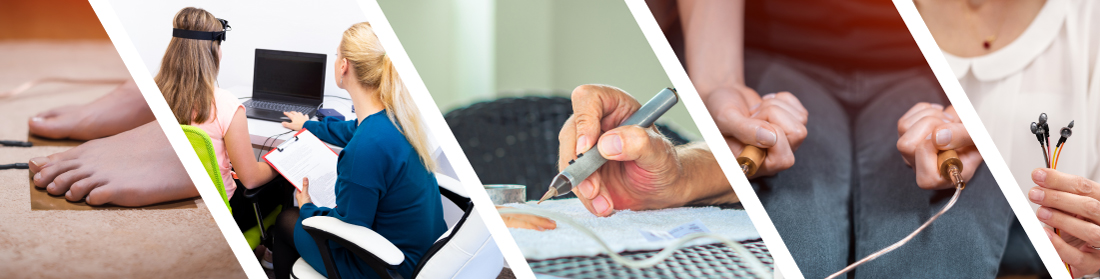
Biofeedback indicates when slight changes in one’s body are required for optimum health including relaxing muscles, and pain and tension reduction. Armed with biofeedback and the skills to better practice new ways to control one’s body, monitoring and hopefully regulating one’s heart rate and breathing can lead to better health.
 There are different types of Biofeedback available and the science and interest around this health-based technology appears to be growing.
Doctors and health practitioners can measure brain waves, (EEG), heart rate, (ECG), muscle activity and responses, (EMG), breath rates, temperature, joint disorders, and sweat gland activity.
Ailments and conditions addressed by biofeedback include high blood pressure, nervousness or stress, ADHD, headache, depression, tinnitus, fibromyalgia, chronic pain, asthma, Raynaud’s Disease, strokes, IBS, constipation, incontinence and treating the side effects from cancer-treating drugs.
 Biofeedback can take the form of Interactive computer programs or wearable mobile devices attached to the head, waist, chest, ears, fingers, or wrists to measure patterns, changes, misc. output, etc.
Along with the above, there are biofeedback devices that measure the level of sensitivities to food and chemicals by simply hanging onto electrodes that sense changes in one’s frequencies when exposed to the vibration of specific substances. This is called the ‘VEGA Test’ or ‘Electrodermal Test’ and can be an effective tool in determining allergies and sensitivities.